

LAVENHAM WALK, SUFFOLK, MADE IN THE UK
The Willow Song Luxury Bath, Body & Home Collection is gentle floral and feminine fragrance, remindful of floaty green florals of Lily of the Valley, Rose and Ivy blended with mellow woody notes of Cedarwood and Musk.
Poetically as it is visually, the willow has always been a tear-jerker: Shakespeare’s Desdemona sobs herself a river in Othello and Ophelia in Hamlet meets a watery end after climbing despairingly on to a wispy willow branch.
Despite ethereal appearances, the weeping willow is quietly potent: the bark is rich in natural anti-inflammatory and anti-bacterial properties, containing natural b-hydroxy acid, excellent for the treatment of dry skin, and high levels of salicin, the natural forerunner to aspirin. We’ve cheered up our crestfallen willow by pairing it with the water lily, long associated with tranquillity and beauty. The root is rich in tannins and restorative gallic acid, and its botanical extract is revered for the soothing, skin-softening benefits it imparts.
WATER LILY AND WILLOW FROM LAVENHAM
Noble Isle sources water lily and willow from the medieval town of Lavenham: willow bark from the Lavenham Woodland Project, a planting initiative located by the famous Lavenham Walk, a two-mile promenade through the green and pleasant English countryside; and water lilies plucked from the 600-year-old spring-fed lake at Lavenham Hall, which has been given new life as the focal point of Kate Denton’s Sculpture Garden.
FEATURED BLOG
At Noble Isle, we work with a variety of celebrated producers to source the extracts for our fragrant Bath & Body collections and multiple luxury hotels around the British Isles. We wanted to take the opportunity to give you Noble Isle’s Guide to the UK, by asking the people who know the area best, where the hidden gems of the region are. This month we contacted The Wilderness Reserve in Suffolk, a luxury collection of manors, farmhouses and cottages in the Suffolk countryside. The Wilderness Reserve is located near to Lavenham Walk, where we source Water Lily and Willow Bark for our Willow Song collection.
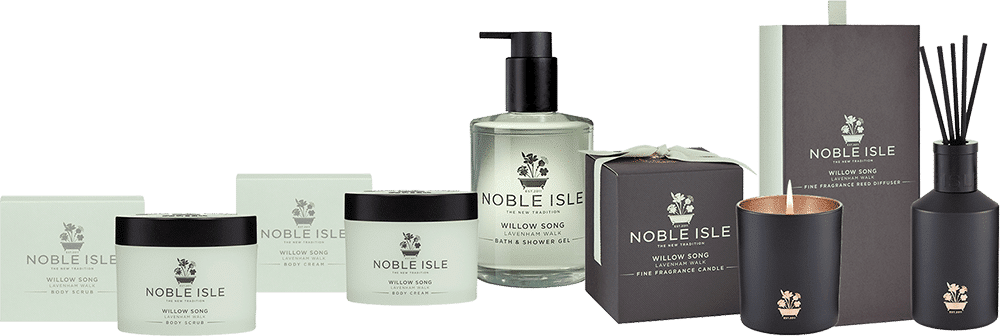
Products available: Bath & Shower Gel, Body Cream, Fine Fragrance Candle and Reed Diffuser.

Thank you for signing up to our emails. You’ll be the first to hear about our Special Offers, Sales and Latest News.
Look out for a confirmation email with your Welcome Discount Code to receive £5 off your first order.